
Key Takeaways
- Build transport around registration, opening segments, meals, transfers, and departures.
- Allow buffers for traffic, alighting, walking, and venue access.
- Keep one live contact chain between the organiser, venue, and transport provider.
- Stagger departures when different groups finish at different times.
Introduction
Event days in Singapore move quickly. Registration may lead straight into welcome remarks, keynote sessions, meals, networking, and closing activities. If a coach arrives late, the effect can run through the programme. We treat event transport planning as part of the run sheet, working backwards from when guests must be ready inside the venue.
For conferences, corporate functions, exhibitions, and group programmes, an event shuttle service should support each key timing point. We consider pickup times, drop-off access, walking time, holding arrangements, and return trips before event day. That gives you more control while your team manages guests, speakers, suppliers, and venue requirements.
Why Transport Timing Affects Programme Flow
Registration, opening speeches, panel sessions, meals, and networking all depend on people being where they need to be. Our event transport planning starts with milestones that cannot comfortably move. From there, we map pickup, travel, unloading, and walking time against those fixed points. When you arrange an event bus rental for a large group, this approach also helps prevent sudden registration queues.
Planning Arrival Windows Before Registration
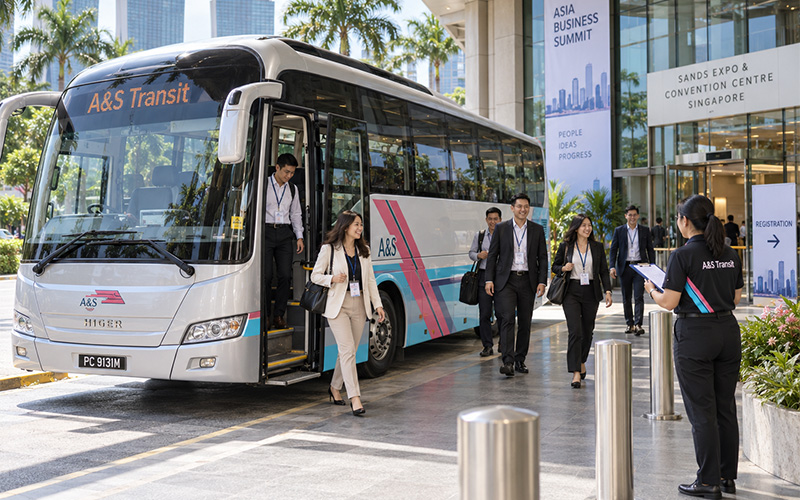
A bus reaching the venue does not mean every guest is ready. People still need to alight, gather belongings, follow signs, collect passes, and reach the event space. We therefore schedule an arrival window before the programme starts, based on group size, venue layout, drop-off conditions, and registration needs. For venue coordination, we separate scheduled vehicle arrival from the time guests should be seated and ready.
Aligning Transport with Opening Segments
Opening remarks, keynote speeches, safety briefings, and first presentations are difficult places to recover lost time. We treat them as fixed anchors. For each opening segment, event transport planning should start with the required guest-ready time, then account for road travel, unloading, guest movement, and a sensible buffer. Speakers or VIPs may also need separate timings.
Building Timing Buffers for Singapore Traffic
Familiar routes can still change with peak-hour demand, rain, incidents, road works, venue traffic, or nearby events. Before finalising dispatch times, we recommend checking current traffic updates and road closures and reviewing access around the destination. A realistic buffer should cover more than road travel alone. We separate traffic contingency from venue-side movement, including unloading, walking, security, and registration time. That protects the programme without making guests arrive too early or leaving vehicles waiting longer than needed.
Allowing Time for Guest Movement After Drop-Off
Transport timing does not stop at the kerb. Guests may need to cross a lobby, follow wayfinding, wait for lifts, clear security, or walk to another hall. Confirm the drop-off point, walking route, access restrictions, and registration steps so a coach that is technically punctual does not still create a programme delay.
Coordinating Transport with Meal Breaks
Meal periods become tight when guests must travel to another dining location. A clear group transport schedule should show session end, boarding time, travel allowance, meal start, return boarding, and the next milestone. We also allow for conversations, washroom stops, and boarding time so you can protect the afternoon programme without rushing guests.
Supporting Session Changes and Mid-Event Movement
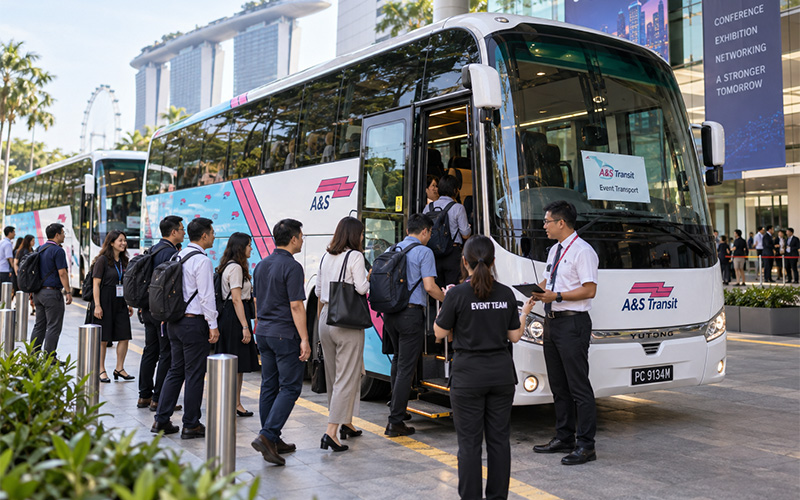
Some programmes move between halls, hotels, offices, exhibition spaces, or offsite activities. Here, event guest transport arrangements should match session end times, boarding points, transfer time, and the next start. A charter shuttle bus can support coordinated point-to-point movement, but we still include boarding and settling time. With several vehicles, defined dispatch order and waiting points reduce unnecessary downtime.
Keeping Transport Coordination Live on Event Day
Even a careful run sheet can shift. A session may overrun, guests may move slowly, or a loading area may become busy. We keep one communication chain between the organiser, venue team, and transport coordinator, with a named person authorised to approve timing changes before they affect the next movement. We confirm the next movement before each transition, especially when vehicles are waiting offsite or completing multiple trips.
Planning Post-Event Departure Timing
Closing remarks, networking, dinner, exhibition viewing, or photos can change when guests are actually ready to leave. Event transport planning should allow time between the advertised finish and vehicle departure. Ask whether the closing time may move, and account for guests collecting belongings, returning passes, or walking from another part of the venue.
Managing Staggered Departures for Different Groups
Speakers, organisers, exhibitors, delegates, and support teams may finish at different times. Staggered windows reduce crowding and avoid keeping early-finish groups waiting. A 45-seater bus may suit the main delegate movement, while a smaller arrangement serves staff later. Give every group a clear pickup point and departure time.
Keeping Event Transport Communication Clear
Good coordination depends on shared details. We confirm pickup location, reporting time, venue drop-off point, waiting arrangement, return timing, passenger group, and the main contact for updates. Keep guest instructions short and usable. Your operational brief can separately hold route notes, driver contacts, vehicle assignments, and contingency details.
Keeping Transport Programme-Led
Strong event transport planning follows your programme, not the other way around. Registration, opening segments, meals, transfers, and departures become anchors for vehicle movements. We use those anchors to map guest movement, confirm venue access, and keep transport decisions tied to the next programme milestone rather than treating each journey as a separate task.
Planning Event Transport with A&S Transit
A&S Transit brings more than 30 years of experience and a fleet of over 100 buses, including 40-seat and 45-seat options. Flexible customised arrangements can support staggered departures, different group sizes, and multiple pickup or transfer requirements across an event schedule.
This helps you match vehicle capacity and departure timing to each group without forcing every movement into one timetable.
Planning an event? Share your schedule, guest numbers, and transport needs with us, and we’ll recommend a practical arrangement around your timings.