
Key Takeaways
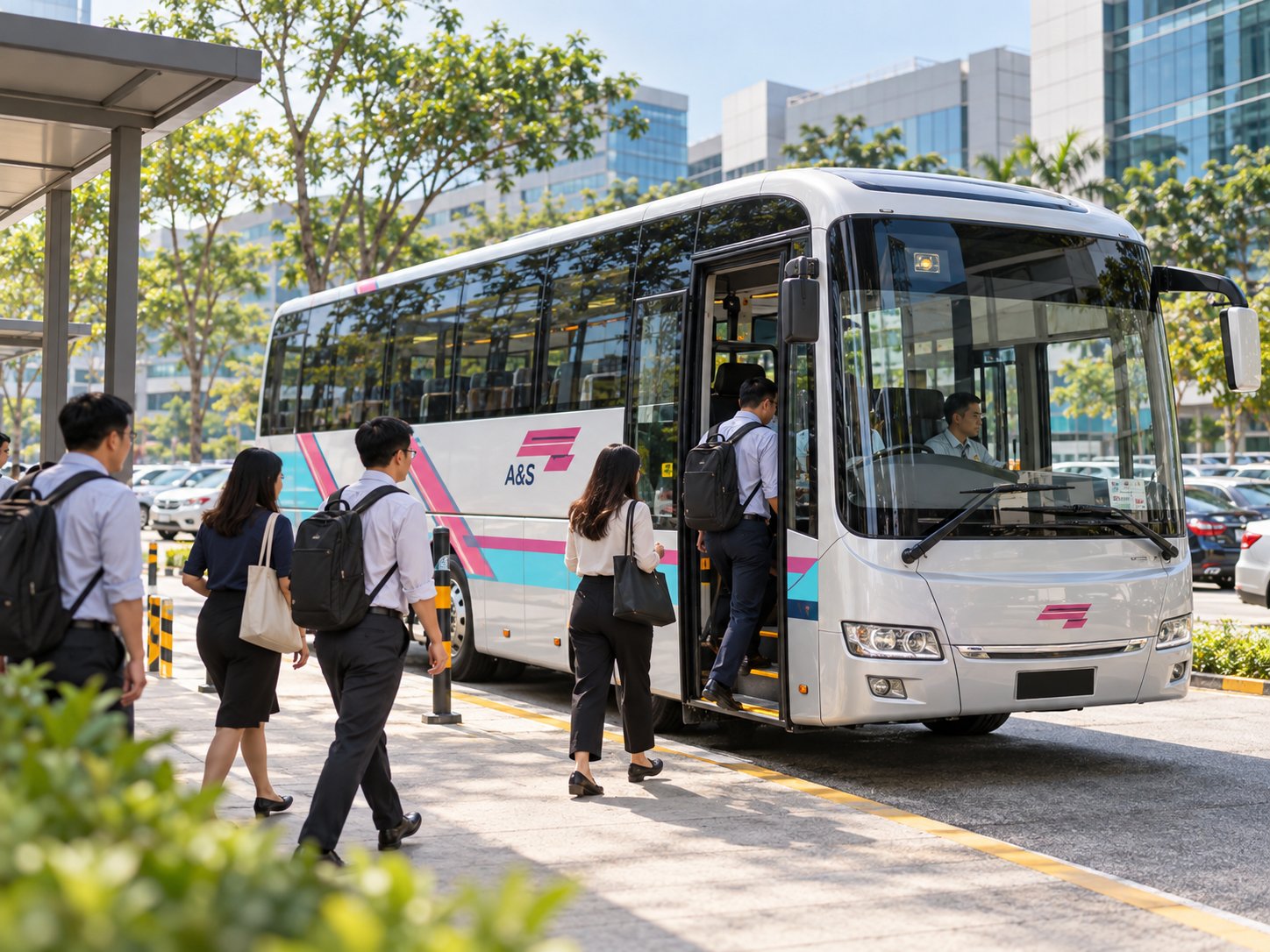
- When staff parking moves off-site, businesses still need a clear way to connect employees from the car park to the workplace.
- A short-distance shuttle can make this final part of the journey more organised and predictable.
- Clear pick-up and drop-off points help staff know where to board and alight without disrupting nearby vehicle or pedestrian movement.
- Fixed shuttle timings around reporting hours or shift changes help staff plan their arrival more easily.
Introduction
In Singapore, parking may sit away from the workplace because of limited lots, renovation works, events, tenant changes, or temporary access restrictions. Even a short walk can become difficult when staff face heavy rain, unclear exits, busy internal roads, or tightly clustered reporting times.
At A&S Transit, we treat an employee shuttle service as a last-mile workplace operation. The route should connect where staff finish driving with where work begins, with boarding, timing, vehicle movement, and arrival planned together.
Why Off-Site Parking Needs Proper Shuttle Planning
Short distances can create friction. Staff may park on different levels, cross vehicle lanes, or arrive in uneven waves. If the boarding location is vague, a bus can arrive on time and still miss passengers.
A planned employee shuttle service gives that movement structure. We assess where drivers enter, when passenger volume peaks, and whether a larger vehicle or more frequent departures are needed. The aim is predictable staff arrival, not vehicle punctuality alone.
When Staff Parking Moves Away from the Workplace
Parking can move because a building has too few lots, a business park centralises spaces, or upgrading works remove familiar parking. The change also affects security, reception, building management, and supervisors who depend on orderly reporting.
An employee bus service can close that gap. Instead of improvising the final leg, staff get one defined connection between parking and the workplace entrance.
Car Park-to-Office Shuttle Routes for Short-Distance Access
The practical route is easy to explain: board at one recognised parking point and alight at one approved workplace location. With several car parks, we look for a sequence that avoids unnecessary loops.
This short car park transfer is not a full commute. Staff have already reached the site area. A charter shuttle bus should follow the most direct workable route while accounting for access controls, turning space, loading activity, and pedestrians.
How Temporary Parking Changes Affect Staff Movement
Temporary arrangements create a learning curve. Staff may head towards an old entrance, use unsuitable routes, or wait in the wrong section of a replacement car park.
An employee shuttle service gives staff a stable routine while the parking arrangement changes. We favour a fixed boarding point and familiar workplace drop-off, and we identify a fallback boarding point in case works or access restrictions make the first location unavailable. If conditions shift again, you can update one transport plan and issue one set of revised travel instructions rather than leaving staff to adjust individually.
Access in Business Parks and Buildings with Limited Parking
Business parks, industrial buildings, logistics facilities, and commercial compounds may separate parking from entrances. Centralised lots can leave an awkward final stretch during rain or shift changes.
To support dependable workplace access, we assess how staff and vehicles move around the site. The pick-up point should be visible and reachable without interfering with controlled loading areas, while the workplace stop should fit within security access rules and internal traffic circulation.
Choosing Clear Pick-Up Points at Off-Site Car Parks
A reliable off-site parking shuttle starts with a waiting point staff can identify quickly. We prefer landmarks such as a named lobby, sheltered walkway, lift core, or designated bay. “Near the exit” is rarely precise enough.
Pick-Up Points Should Be Easy to Explain
The nearest spot is not always best. A stronger point is one most staff can reach safely and recognise quickly. If you can explain it in one short message, boarding becomes easier to manage.
Planning Drop-Off Points Near the Workplace Entrance
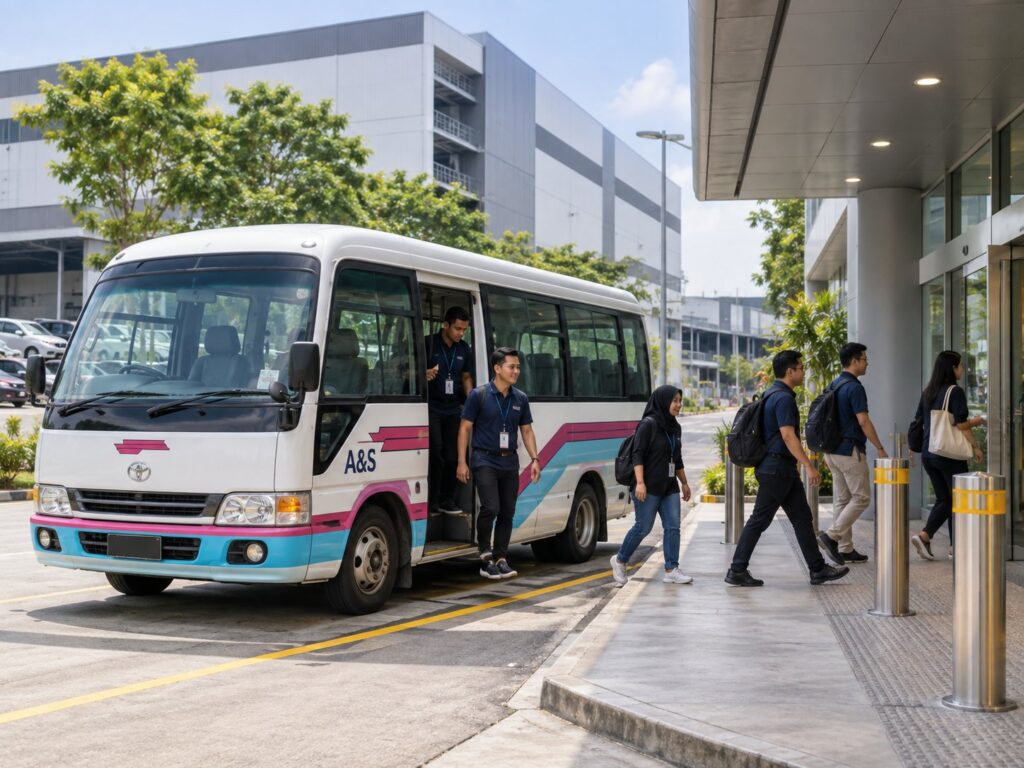
We look for a point where staff can alight safely while allowing the vehicle to pull away without blocking through-traffic or creating unnecessary reversing movements. LTA’s guidance on safe drop-off design highlights pedestrian crossings, bypass movement, and practical access arrangements.
A main lobby may seem ideal, but an approved side entrance or sheltered bay can work better when the frontage is busy. Your stop should support convenience without disrupting loading, security, visitor traffic, or pedestrian flow.
Fixed Shuttle Timings for Predictable Access
Staff adapt faster when timing is simple. Publish when the shuttle leaves, how often it runs, and which departures matter around reporting hours or shift changes. Avoid schedules that make people guess when the next ride arrives.
When planning an employee shuttle service, we work backwards from the required arrival window. Parking, walking, boarding, riding, and alighting take time. A workable timetable includes those steps, not driving time alone.
Short-Distance Access Without Overcomplicating the Route
Keep the route focused. Unrelated stops can turn a simple parking connection into a slower service that is harder to explain and keep consistent. One clear loop often gives workplace teams better control.
We also test whether each stop earns its place. If an extra collection point saves a few people a short walk but delays everyone else, the trade-off may be poor. Simpler routing means fewer variables when conditions change.
Keeping Staff Updated During Parking Changes
Before a change, tell staff where to park, where to wait, when the shuttle runs, and where it drops them. Add a simple landmark or map reference where useful, especially in multi-storey car parks.
Keep updates practical. If a boarding point moves, state exactly what changed. We also recommend one contact point so enquiries are channelled through a single place instead of reaching security, reception, supervisors, and transport separately.
How Flexible Shuttle Planning Supports Off-Site Parking Arrangements
Some workplaces need a shuttle for several renovation days. Others need a recurring loop because limited parking is permanent. Reporting patterns, opening times, access restrictions, and traffic flow determine how the arrangement operates.
A&S Transit supports customised ad-hoc and recurring transport planning. With more than 30 years of experience and a fleet of over 100 buses, we can shape an employee shuttle service around parking and reporting needs. We can then select a private bus with the right capacity and schedule for the route.
Conclusion
If your staff parking is moving off-site, plan the connection before the first morning. At A&S Transit, we can shape the shuttle arrangement around your parking location, workplace entrance, reporting times, passenger flow, and site access constraints.
Contact us to discuss a practical shuttle plan that keeps staff movement clear, organised, and easy to manage.