
Key Takeaways
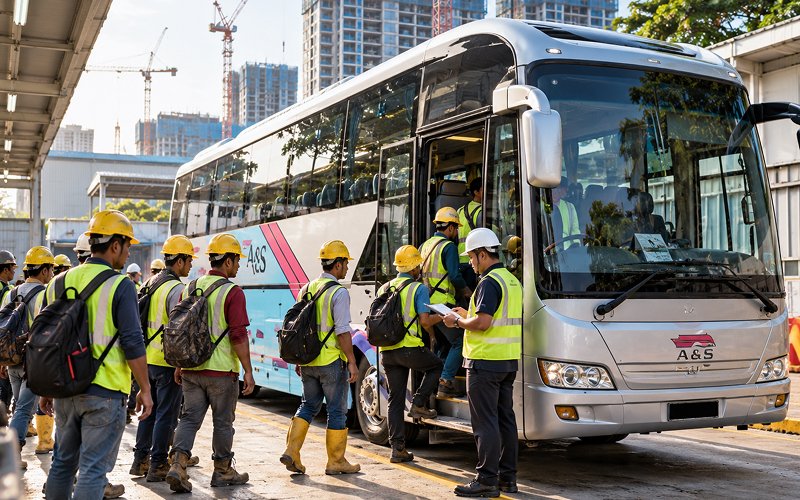
- A sudden increase in team size can put pressure on an existing travel plan.
- Check whether the current vehicles still have enough space before adding more people.
- Larger groups may need extra vehicles or earlier pick-up times to keep arrivals organised.
- Give affected teams clear instructions on where to wait, when to arrive, and which vehicle to board.
Introduction
In Singapore, project headcount can change quickly. Installation accelerates, rectification work expands, or a logistics operation needs another crew. When that happens, the assumptions behind your manpower transport plan may no longer hold. We look at how many people must move, where they report, when they must arrive, and whether the current arrangement still works.
Why Sudden Team Growth Affects Transport Planning
A route designed for 25 people behaves differently when 10 more join overnight. Boarding takes longer, seats disappear faster, and a delay at the first pick-up can affect reporting time. The practical issue is organising project team transport, rather than simply adding names to the passenger list. You need to check whether the plan still matches the work phase, access conditions, and start time.
We treat manpower transport as part of project coordination. If the work programme changes, the movement plan should change with it. That keeps extra manpower from creating a new operational bottleneck before workers even reach the site.
Reviewing Passenger Capacity Before Adding Transport
Start with the actual headcount, not the vehicle you already have. Confirm passengers, spare seats, boarding time, and whether everyone shares the same reporting point. If the increase is small, a timing adjustment may be enough. If spare seats are limited, adding more people can delay boarding and put departure timing at risk.
For larger additions, a 45-seater bus may suit the group, but capacity alone should never decide the arrangement. We also check where people board, how quickly the group can assemble, and whether the site can receive everyone at the same time.
When Short-Term Workforce Increases Usually Happen
Short-term increases often appear around installation, inspection, handover preparation, loading peaks, urgent repairs, or event setup. These periods may last only several days, so changing a permanent route is often unnecessary. A temporary bus arrangement can cover the extra demand while keeping the original operation intact.
For short-term increases, additional capacity can be built into the manpower transport plan only for the period it is needed, allowing the original arrangement to resume afterwards.
How Temporary Additional Buses Help Manage Extra Headcount
An additional bus creates separation when the added team has different needs. Perhaps the new crew reports elsewhere, starts 30 minutes earlier, or enters through a different gate. Keeping that group separate can make dispatch easier than forcing everybody through one route.
For some projects, a dedicated worker bus can also make headcount control clearer. Coordinators can identify which team belongs on which vehicle and reduce last-minute reshuffling at the boarding point.
Adjusting Pick-Up Times When Headcount Changes
More passengers mean more boarding time. If 15 extra workers arrive within the same five-minute window, the original departure time may become unrealistic. We would rather adjust the boarding window than rely on people rushing.
A slightly earlier pick-up can protect the arrival target, especially when the larger group needs roll-call checks, equipment loading, or access verification. Your manpower transport plan should account for those practical minutes instead of treating them as unexpected delays.
Moving Extra Site Teams During Peak Project Phases
Peak phases create two transport problems: more people need to move, and the site becomes busier. Extra teams may arrive while existing crews, deliveries, and contractor vehicles use the same access area. That is why workforce movement should be coordinated with site entry, not planned in isolation.
If a temporary arrangement needs to use a public bus stop, LTA approval is required for pick-up or drop-off. OneMotoring states that applications must be submitted at least one month before the intended date of use, so this lead time should be checked before a last-minute transport change.
Keeping Transport Clear When Manpower Needs Change Quickly
Fast changes create confusion when instructions travel through too many people. We recommend one short update containing the affected team, pick-up point, boarding window, vehicle reference, and reporting destination. If the change lasts only three days, say so.
Clear instructions matter even more when the original and additional buses operate close together. Clear manpower transport instructions can help prevent workers from boarding the wrong vehicle, missing departures, or repeatedly calling supervisors for clarification.
Updated Transport Details Should Reach The Right Group
Not every worker needs every update. Send revised details only to the people affected, while keeping supervisors informed. This prevents an unchanged team from second-guessing its usual timing because another crew received a temporary instruction.
Coordinating Between Project Managers And Transport Providers
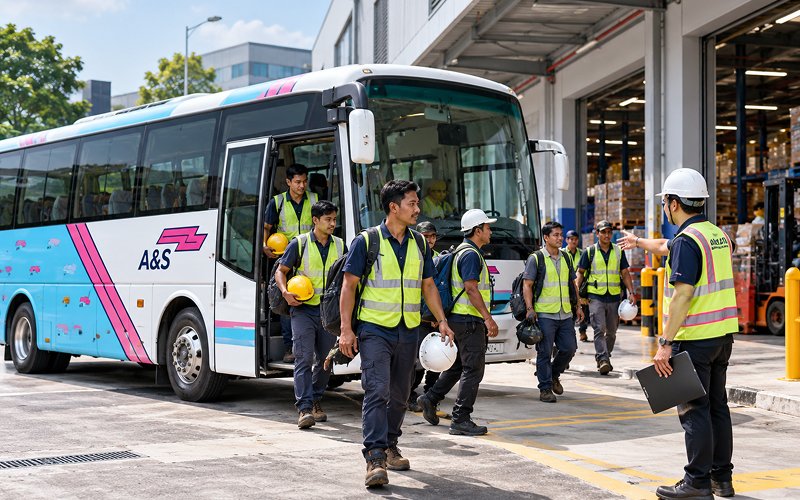
The project manager knows the manpower requirement. The transport provider knows what can be operated practically. Good planning happens when those two views meet early.
We normally want the updated headcount, reporting time, boarding location, site access point, expected duration, and any split shifts. With those details, a bus charter can be arranged around the real project need instead of being treated as a generic point-to-point booking.
Why Flexible Planning Matters More Than A Fixed Route
Before changing the whole route, identify what actually changed: headcount, reporting time, pick-up point, or duration. If only one variable shifted, adjust that part of the operation first.
For example, added headcount may require extra capacity, while a new reporting time may only require an earlier departure. This avoids rebuilding a route that still works.
How A&S Transit Supports Short-Term Project Transport Needs
At A&S Transit, we bring more than 30 years of transport experience, a fleet of over 100 buses, and vehicle capacities from 10 to 45 seats to changing project requirements. We support ad-hoc and recurring services, point-to-point movements, and customised planning for organisations across Singapore.
If your project team is growing, send us the revised headcount, pick-up points, arrival time, and expected duration. We can help shape an additional bus, temporary route, or adjusted timing around the work that needs to happen next.