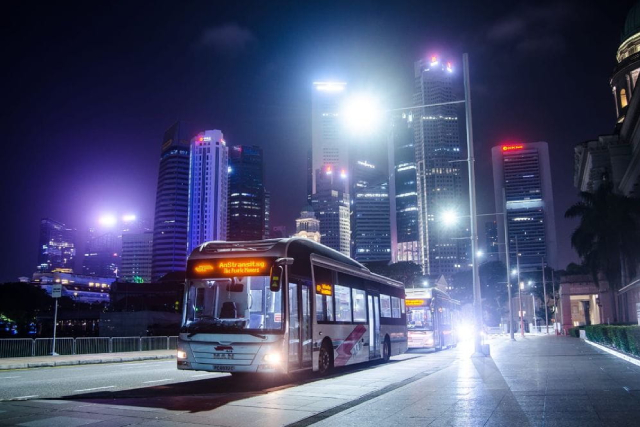
Getting to work before the sun comes up or heading home long after everyone else has gone to bed is a reality for thousands of people in Singapore. Nurses, security officers, factory operators, construction workers, cleaners, and F&B staff often keep hours that don’t match public transport schedules, leaving them scrambling for ways to get to and from work safely.
For employers, this creates a genuine headache. Staff who arrive late or exhausted because they spent an hour waiting for a bus that never seemed to come are less productive and more likely to burn out. Companies managing daily worker transport quickly realise that public transport alone rarely covers the gaps that shift work creates.
Why Odd-Hour Commutes Are So Difficult
Singapore’s public transport system is excellent by most standards, but it wasn’t built with 4am starts or 1am finishes in mind. The MRT typically runs from around 5.30am to midnight, and while night buses exist, they’re limited in number and coverage. For someone working in Tuas, Jurong Island, or a remote industrial park, the last mile can feel impossibly long when there’s no train station nearby and taxis are scarce or expensive at odd hours.
A few common issues shift workers face include:
- Long waits for infrequent night buses, especially on weekdays
- Limited or no MRT service during very early or very late hours
- Higher taxi and ride-hailing fares during peak surge periods, which can spike around shift changes
- Personal safety concerns when walking alone to bus stops or car parks in the dark
- Unpredictable arrival times that throw off sleep schedules and family routines
None of this is new information to HR managers or operations teams, but the solutions aren’t always obvious, especially when budgets are tight and staff are spread across multiple sites.
What Employers Can Actually Do
The good news is that there are practical, proven ways to solve this problem, and many companies in Singapore have already found approaches that work for their teams.
Flexible bus charters for changing schedules. Not every business needs a permanent shuttle route. Some only need transport support during certain seasons, project phases, or shift rotations. Arranging bus rental in Singapore on a contract basis gives companies the flexibility to scale transport up or down as needed, without the long-term commitment of owning a fleet or hiring dedicated drivers.
Staggered pickup points. Rather than expecting everyone to converge on a single location, some companies set up multiple pickup points across different neighbourhoods. This cuts down individual commute times and makes the service more appealing to staff who live further from the main hub.
Subsidised ride-hailing or taxi vouchers. For smaller teams or irregular shift patterns, some employers offer vouchers or reimbursements for ride-hailing services during odd hours. This can be a lighter-touch solution, though costs can add up quickly if not carefully managed.
The Human Side of the Problem
Beyond logistics, there’s a real wellbeing dimension to this. Shift workers already deal with disrupted sleep cycles and less time with family and friends. Adding a stressful, unsafe, or exhausting commute on top of that takes a toll. Employees who feel supported in getting to work safely tend to be more loyal, more punctual, and generally happier in their roles.
Safety is a particularly important consideration for night shift staff, many of whom are women walking to bus stops or car parks in low-light conditions. A company-arranged transport solution removes a lot of that anxiety and sends a clear signal that the business genuinely cares about its people, not just their output.
There’s also a practical business case here. High turnover in shift-based roles is expensive, and transport difficulties are frequently cited as a reason employees leave for jobs closer to home or with better commute support. Solving this problem well can directly improve retention.
Getting Started
For companies exploring transport solutions for the first time, a good starting point is mapping out where staff actually live. This helps identify natural clusters and the most efficient pickup points. From there, it’s a case of deciding between a fixed shuttle arrangement, a flexible charter option, or a hybrid of both depending on how consistent the shift patterns are.
It’s also worth speaking to a transport provider directly, since experienced operators can often suggest route configurations or scheduling tweaks that aren’t obvious from the outside. They deal with these challenges across many different industries and sites, so they tend to have a good sense of what actually works in practice.
Getting employees to and from work safely during unusual hours isn’t a small logistical footnote. It shapes how people feel about their jobs, how safe they feel doing them, and whether they stick around long enough to grow within the company. A thoughtful transport plan, whether a shuttle service or a charter arrangement, can make an outsized difference to how a shift-based workforce experiences their daily grind.
If your company is looking for a reliable partner to handle staff transport, A&S Transit offers charter and shuttle services designed around the realities of shift work in Singapore.