Singapore runs on people getting to the right place at the right time. Behind every finished product, every hotel room turned over, every event that goes off without a hitch, there is a workforce that had to show up first. For many companies, how that workforce gets to site is not a small logistics detail. It shapes attendance, punctuality and how ready people are to actually work once they clock in.
This is why more businesses across a wide range of sectors are turning to organised staff transport rather than leaving employees to figure out their own commute. A shared vehicle that picks up at fixed points and drops workers right at the gate removes a whole layer of daily stress. It also gives employers a level of predictability that public transport alone cannot always guarantee, especially for early shifts, late shifts, or worksites tucked away from MRT stations.
Below, we look at the industries that tend to gain the most from this kind of arrangement, and why.
Manufacturing and Process Industries
Factories and plants are often the clearest example of why staff transport makes sense. Many manufacturing sites sit in industrial estates such as Tuas, Jurong or Senoko, areas that are not always well served by public transport, particularly outside peak hours. Shift patterns compound the problem. A worker starting at 6am or finishing at midnight cannot always rely on the first or last train.
The Ministry of Manpower, together with the Ministry of Transport, the Land Transport Authority, the Singapore Police Force and the Building and Construction Authority, jointly issued an advisory on the safe transportation of workers, a signal of how seriously transport safety is treated for sectors that move large numbers of employees daily. For manufacturers, organised transport also supports attendance figures and reduces the number of latecomers scrambling in after a missed bus or a long walk from the nearest station. A bus charter in Singapore for shift workers is one of the more straightforward ways plant operators solve this without building an entire fleet of their own.
Construction
Construction sites move. A crew working in Punggol this quarter might be redeployed to a site in Woodlands the next, and workers are not always local to either area. Coordinating dozens or hundreds of workers to a shifting worksite by public transport is inefficient at best and unsafe at worst, particularly when early call times mean workers would otherwise be walking along unlit roads before dawn.
Chartered transport solves the coordination problem directly. One pickup point, one drop-off point, and a driver who knows the route. It also plays into workplace safety obligations, since getting large groups of workers to site safely is part of what the inter-agency advisory above is designed to address.
Healthcare and Eldercare
Hospitals, nursing homes and community care facilities run around the clock, which means their staff are commuting at hours when buses and trains are less frequent. Night shift differentials exist in healthcare precisely because working through the night carries a cost, and getting home safely afterwards is part of that equation.
- Staff working graveyard shifts often cannot rely on regular bus frequencies
- Care facilities are sometimes located in quieter residential areas, away from major transport nodes
- Consistent transport reduces staff turnover linked to commute fatigue, a factor healthcare employers increasingly track
For an industry already under pressure to retain nurses, allied health professionals and support staff, transport becomes part of the retention package rather than an afterthought.
Hospitality, F&B and Events
Hotels, restaurants and event companies share a common trait: their busiest hours are often everyone else’s off hours. A banquet team finishing clean-up at 1am, or an event crew starting setup at 5am for a conference, are working outside the windows when public transport runs smoothly.
Event companies in particular deal with variable, project-based staffing. A wedding this weekend might need forty additional part-timers who all need to reach a venue on the outskirts of the city, then get home again once the event wraps. Chartering transport for these bursts of activity is often more practical than expecting each part-timer to arrange their own way there, particularly when the venue is not near an MRT line.
Corporate Offices and Business Parks
Not every use case involves shift work. Business parks such as Changi Business Park or one-north house large numbers of office staff, and while these locations are generally well connected, a daily shuttle from nearby MRT stations still saves employees a meaningful amount of walking or waiting, especially during rain. This is easy to overlook, but it adds up. A better commute leading to better work is something many HR teams have started paying closer attention to when thinking about employee wellbeing and productivity.
Bringing It Together
Every one of these industries has a different rhythm, but the underlying need is the same. Workers who arrive on time, feeling reasonably fresh, tend to perform better and stay longer with an employer. Getting there reliably should not be something staff have to solve entirely on their own, particularly when their working hours fall outside the times public transport runs at its best.
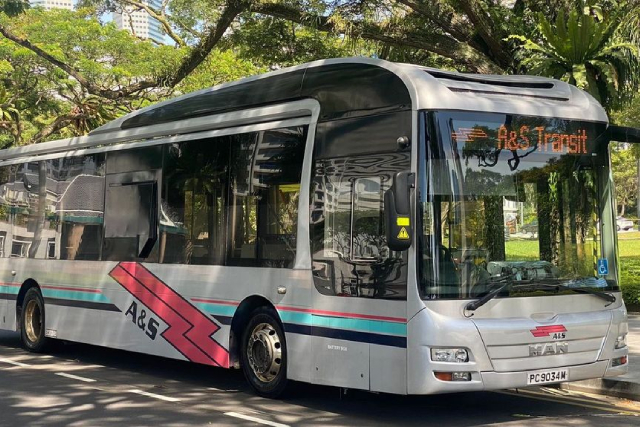
If your company is weighing up whether organised staff transport makes sense for your team, A&S Transit can help you work through the options, from daily shuttle routes to one-off charters for events or projects. Get in touch with A&S Transit to discuss what would fit your workforce best.